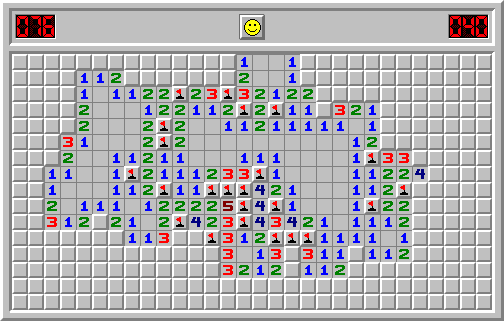
Today it has come to light that Moon Taeil, member of NCT, has committed some variation of sex crime that was bad enough for him to skip hiatus-limbo entirely and go straight to being booted. The details surrounding the crime are not clear yet, but that is not what this post is going to be about. Surely this crime is disgusting and I stand with the person he hurt. I don’t need to recount what happened tabloid style. Instead, I’m here to talk about my parasocial relationship with kpop boys and how this is potentially a greater social phenomenon. I call it ‘Kpop Boy Minesweeper’.
So what is Kpop Boy Minesweeper? It is the game fans play when picking an idol to support, mostly ones’ bias (favorite member). This is partially self-explanatory- it’s the usual parasocial situation everyone warns against. The ever so infamous “you do not know this celebrity, and they could be someone completely different behind closed doors.” You pick a guy to get attached to and hope you didn’t step on a landmine. It’s partially intuition, partially luck. But when it comes to kpop, there’s more to it than that. There’s unique risks within the genre.
I have found myself thinking before that part of the reason I feel drawn to these kpop boys is because they feel “safe.” It’s common knowledge that kpop idols have sasaengs, stalkers, and a unique level of fanatical hysteria surrounding them. This led me to imagine that given the idol experience, any male idol would himself be subjected to the very same abuse us average female fans are subjected to via misogyny, and therefore less like to perpetrate. The vehicle of our abuse is misogyny, whereas the vehicle for theirs is fame. For example, male idols are sexually harassed, and so one can presume being the victim of such a crime would teach one to understand its harm and therefore be less likely to perpetrate. As a victim of sexual assault myself, kpop boys sometimes seem deceptively safe; if they know how much it hurts, they will know better than to violate or abuse somebody else. I don’t think it’s much of a stretch to consider that other fans might be thinking this way as well.
I catch myself feeling more affection for these male idols because they feel like safe people to be around and love. There is this subconscious idea that they would not hurt me in the ways I am actually afraid of. Sure, there’s always the stuck-up arrogant celebrity stereotype that we are reminded of. There’s the healthy skepticism fans are reminded to have that their idols may not be who they seem. I cannot speak for everyone, but when I think of those things, my mind usually goes to “he might be an asshole who thinks of me, nonfamous, as less than” rather than “he might be a monster committing sex crimes.” My reflexive way of thinking is that maybe my idol is actually rude in real life, but surely he’s not a sexual abuser. It’s the idea that there’s a certain level of flaws he may have that I can accept, but he surely does not have the flaws I really am afraid of.
The idol industry seems to be a unique breeding ground for the exact conditions to lull us women into a false sense of security. Not only is there the abuse that comes hand-in-hand with fame to ease our fears, but there is also the trends among popular idols. There’s the transgression of kpop as a whole. Male idols are not traditionally hyper-masculine, instead rebelling against gender norms. This rebellion adds to the idea that they would reject patriarchy. When you combine the fashion and norms within the idol world with the faults of fame, it is no wonder that women feel that their idol is the exception.
It’s this type of thinking that is somewhat of a gateway to have a growing attachment to these kpop boys. Not only do we find them talented, handsome, to have nice personalities- but there’s our subconscious idea that they wouldn’t hurt us, and that’s the real bottom line. That’s the backbone upon which the rest of our fantasy can be built. These men feel safe, and so we can allow ourselves to appreciate and enjoy everything else about them. We get attached because we find them to be a symbol of the kind of men we wish were around us, the kind we hold out hope of finding in our own lives. That’s why it is all the more devastating when your idol turns out to not be who you thought they were- that hope you desperately try to hold onto, that there are good men out there, suddenly feels crushed.
This fame-abuse theory is not a true rule. Just like in other areas of life, abuse can be a cycle. It’s just as likely that one man goes on to perpetuate the problem as another man goes on to try and solve it. Some victims go on to be perpetrators. I’m sure this genuinely scares a lot of us. I know many fellow fans must feel a nagging sense of fear whenever another idol is exposed to be a predator, because there’s always the looming threat of your emotional support idol being next. It shatters the suspension of disbelief we have subconsciously built up surrounding these men.
This is the essence of Kpop Boy Minesweeper. Trying to avoid getting your heart broken by getting attached to the wrong guy, when the whole scenario is precariously set up to lull us into a false sense of security. The safety of kpop idols is an illusion. The idol industry, boy bands, and the like were all built on the exploitation of teen boys, grooming, and sexual abuse. From the American cases of NSYNC and Backstreet Boys, to the Eastern classics like Johnny Kitagawa’s Johnnys.
If there are other fans out there who are also survivors of sexual assault and feel this way, I hope maybe my writing this makes them feel less alone. Ultimately, I don’t think there’s anything wrong with letting yourself take a leap of faith and loving something. No matter how scary it is. Living in fear is no way to live. Hopefully, just being aware of why we think and feel the way we do and what our blind spots are can help us not to end up heartbroken in the end. We should always maintain our vigilance and I hope that we can change this industry.

 Rocker Kpop
Leave a comment